Table manners aren’t a single rulebook. They’re a collection of habits shaped by tradition, geography, and social norms. Every dinner table has them, but what feels polite in one place may be baffling in another, and breaking a custom can cause a lot of tension.
This piece looks at dining behaviors around the world that may surprise some travelers and challenge assumptions about “good manners.”
Actions That Speak at the Table

In some cultures, mealtime behavior itself sends a message. In Japan, slurping noodles is not only acceptable but expected. The sound tells the cook that the meal is satisfying, and many believe it makes the noodles taste better while cooling them down. Staying silent can give the impression that the food is less enjoyable, even if that’s not the case.
Across the East China Sea, or China, leaving a small portion of food on your plate shows that you’re full and your host has been generous. Clearing your plate entirely can suggest you weren’t given enough, which then prompts the host to offer more. This small act is part of the country’s long-standing focus on hospitality.
Europe has its own symbolic gestures. In Hungary, clinking beer glasses is avoided, and is rooted in a tradition linked to the mid-1800s when Austrian forces reportedly celebrated their victory over Hungary with that gesture. Wine toasts remain common, but beer drinkers often skip the clink altogether out of respect for history.
In Ethiopia, the entire meal can be one shared experience. Food is served on a large platter, and diners use pieces of injera bread to scoop up portions. It’s a communal style meant to create connection and conversation. In Russia, a similar sense of inclusion appears in the expectation of accepting an offered drink. Refusing is often viewed as rejecting friendship, and toasts are a key part of the meal, with guests joining in to honor the occasion.
Tools, Hands, and the Right Way to Use Them
Some traditions focus on the method of eating as much as the food itself. In India, the rule is clear: eat with your right hand and avoid the left. The custom is rooted in both hygiene and respect, and in many households, it extends beyond meals to other daily activities.
France elevates bread’s role at the table. Instead of serving as a side dish to the main dish, it serves as a tool to scoop or guide food or collect sauce from the plate. Proper etiquette is to tear off small pieces rather than bite directly into a whole slice.
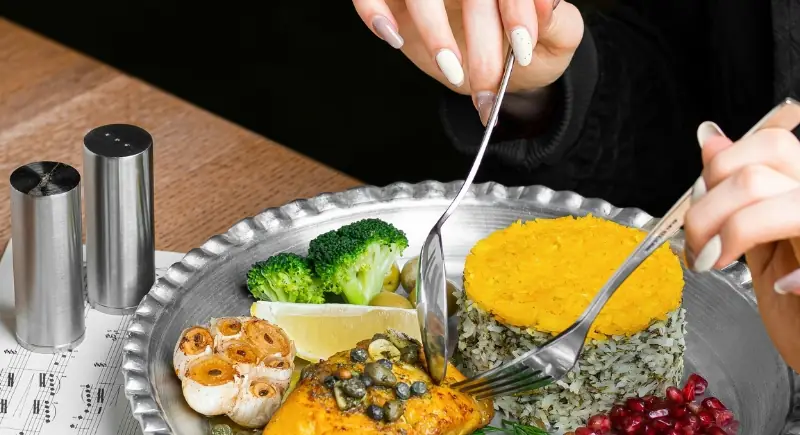
In Thailand, utensils follow their own pattern. The fork is used only to push food onto a spoon, which is then brought to the mouth. The habit keeps meals tidy and reflects a preference for coordinated dining over direct bites from the fork.
What You Don’t Add
Elsewhere, etiquette focuses on what stays off the plate. In Italy, Parmesan cheese is treated with restraint. Adding it to seafood pasta is frowned upon, as it can overwhelm the intended flavors. Chefs take pride in the balance of their dishes, and altering that balance is seen as disregarding their skill.
Portugal follows a similar principle with seasoning. Salt and pepper are rarely found on the table because dishes are served as the chef intended. Asking for them can be interpreted as saying the meal isn’t seasoned well enough. In both countries, the expectation is simple: trust the preparation and taste the dish as it was meant to be.