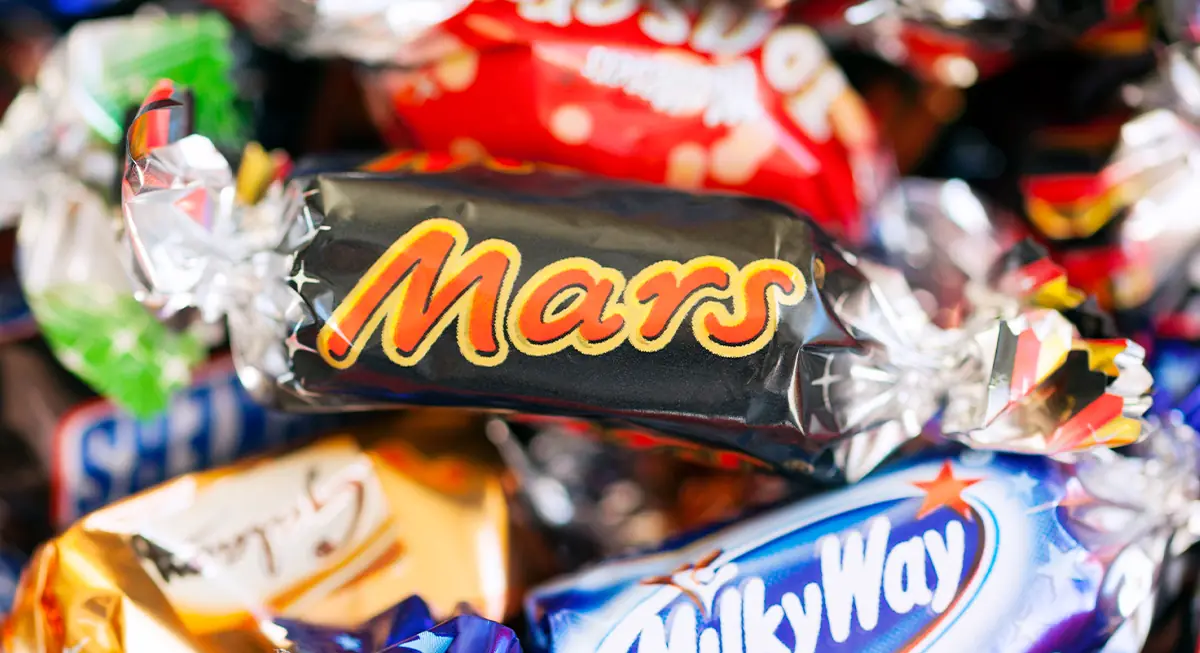
Mars is widely associated with chocolate. Brands like Snickers, M&M’s, Twix, and Milky Way dominate that perception. However, candy now represents less than half of the company’s business. The larger share comes from a different industry altogether.
The company’s primary business is pet care, and it has grown into a global operation valued at roughly $112 billion.
The Strategic Shift Began In The 1930s

Mars’ expansion beyond candy started in 1935. After a family conflict, Forrest Mars Sr. moved to the United Kingdom and purchased Chappie, a dog food company. At the time, pet food was a low-profile category with limited prestige. It lacked the excitement of confectionery and drew little attention from major food brands. However, it did offer consistency. Pets eat every day. Owners repurchase the same products for years. The reliability created a foundation that candy could not replicate.
Once someone owns a pet, spending becomes structured. Food is bought weekly. Vet visits become scheduled. Health needs increase with age, and the pattern often lasts more than a decade per animal. Mars built its strategy around that behavior. Over several decades, the company acquired major pet nutrition brands, including Pedigree, Whiskas, and Royal Canin. Each acquisition strengthened their portfolio.
Expanding Beyond Food Into Veterinary Care

The most important shift came when Mars moved beyond nutrition.
Mars acquired Banfield Pet Hospital and later purchased VCA Inc. in 2017 for $9.1 billion. VCA operates thousands of animal hospitals and specialty clinics across multiple countries. Combined with Banfield, Mars gained control over a large portion of the veterinary care pipeline. This changed the business model entirely.
The company now participates in both daily consumption and episodic medical care. When pets require treatment, owners prioritize trust and continuity of care. The dynamic creates long-term customer relationships that are difficult to disrupt.
Mars Petcare now spans food brands, veterinary hospitals, diagnostics, and specialty services across more than 2,000 locations worldwide. Tens of thousands of veterinarians and support staff operate within this network.
Most customers never connect these services to Mars’ confectionery brands—a separation that was deliberately made. Mars maintains clear brand boundaries to allow each business to operate independently without compromising trust or identity.
Technology And Data Are Becoming Core Assets
Mars has increased investment in pet health technology. This includes pet DNA testing, AI-assisted diagnostics, wearable health trackers, and predictive tools designed to detect illness earlier.
The company is also upgrading logistics, including electric delivery fleets and data-driven supply chains that support clinics and specialty diets. These investments reinforce Mars’ position as a long-term provider of health services.
Private Ownership Enabled Long-Term Execution

Mars has remained privately owned throughout its history, and it has allowed the company to invest patiently without public market pressure. It could acquire veterinary networks, fund research, and wait years for returns without defending quarterly results.
This approach proved especially valuable as pets became central to family life during the late twentieth century. When spending shifted from basic food to specialized care, Mars was already positioned to capture that demand.
Today, pet care accounts for the majority of Mars’ revenue and continues to grow faster than confectionery. Candy made the company recognizable, but pet care made it structurally resilient.