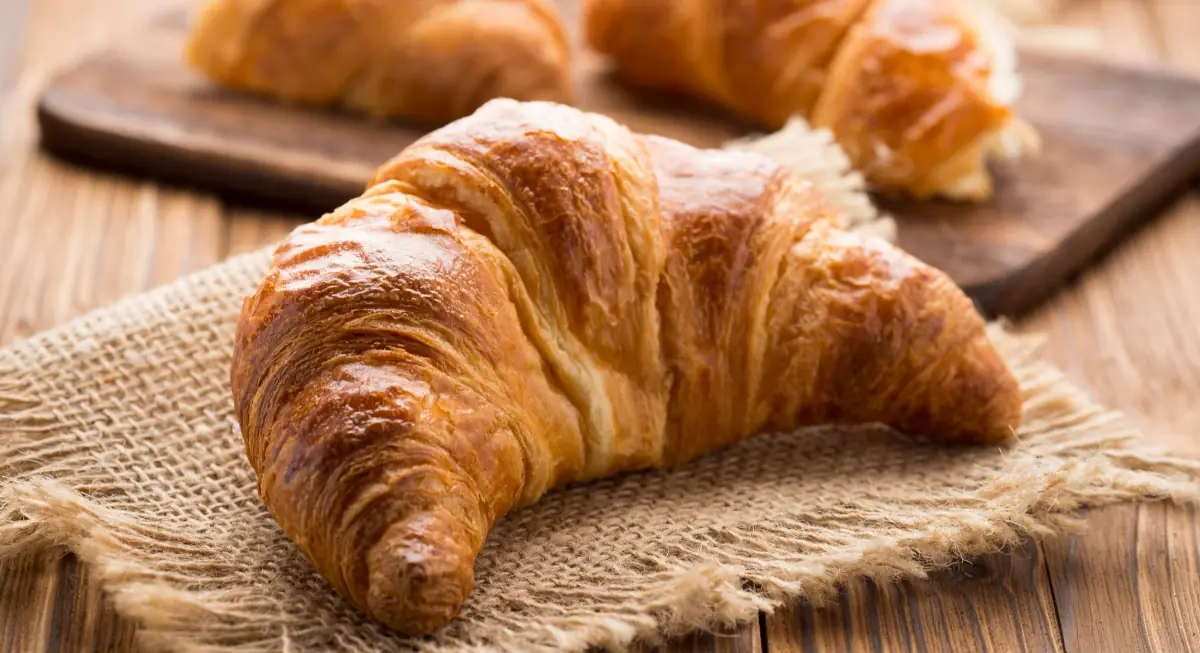
France may have perfected the croissant, but it did not invent it. The pastry’s roots lead back to Austria, where an earlier crescent-shaped bread inspired what came later. French bakers refined the idea, adding butter, technique, and flair until it became the café classic people recognize today.
The Austrian Pastry That Came First
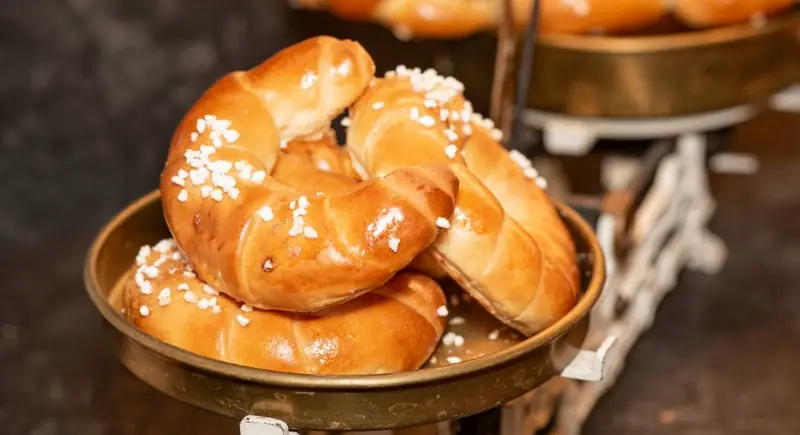
The true ancestor of the croissant is the kipferl, a crescent-shaped baked good that appeared in Austria as early as the 13th century.
Historical records confirm that kipferl existed centuries before anything resembling a modern croissant showed up in France. These early kipferl were not flaky pastries. They were closer to bread or lightly sweetened yeast rolls, sometimes dense, sometimes soft, but always curved into a crescent shape.
Legends often claim the kipferl was created to celebrate victories over Ottoman forces, whose flag featured a crescent moon. While that story is popular and frequently repeated, food historians generally agree there’s no solid evidence to support it.
What is documented, however, is that the kipferl was well established in Austrian baking traditions long before France entered the picture.
How Austria’s Kipferl Reached Paris
The croissant’s journey to France happened much later, in the 19th century. In 1839, Austrian entrepreneur August Zang opened the Boulangerie Viennoise in Paris. His bakery specialized in Viennese baked goods, including kipferl, and it quickly became fashionable.
Parisians developed a taste for Austrian pastries, which is why the category of breakfast pastries is still known today as viennoiseries, a direct reference to Vienna.
At this stage, what the French were eating still wasn’t the croissant as we recognize it now. These early French versions were closer to brioche than pastry, made with yeast dough rather than laminated butter layers. They were shaped like crescents and inspired by the kipferl, but texturally very different from the crisp, flaky croissants of today.
France’s Real Contribution: Butter and Lamination
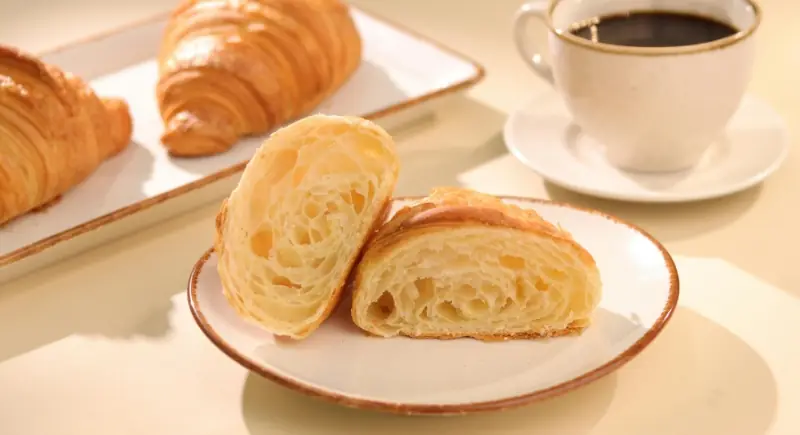
France’s defining role in croissant history came in the early 20th century. Around 1915, French baker Sylvain Claudius Goy published a recipe that replaced brioche-style dough with laminated puff pastry. This technique involved folding butter into the dough repeatedly, creating thin layers that expand during baking.
That process is what gives croissants their signature texture: crisp on the outside, airy and layered on the inside, and unapologetically rich. From that point on, the croissant became something distinct from its Austrian predecessor.
France didn’t invent the crescent-shaped pastry, but it perfected the method that turned it into a global icon. That contributes to why the croissant feels so French today.
Part of the confusion comes from how completely France embraced it. The name itself is French, meaning “crescent,” and the pastry became deeply tied to French daily life. It moved from specialty bakeries into everyday breakfast routines, cafés, and eventually international cuisine.
Meanwhile, the kipferl never achieved the same global reach. While it still exists in Austria and neighboring regions, it remains relatively unknown outside Central Europe. The croissant, refined through French technique and branding, took on a life of its own.
What About Marie Antoinette?
The idea that Marie Antoinette brought the croissant to France is one of the most persistent food myths. While she was Austrian, there is no historical evidence linking her to the croissant’s arrival in France.
In fact, the first documented appearance of croissants in Paris occurred decades after her death. Like “let them eat cake,” it’s a story that sounds good but doesn’t hold up under scrutiny.
So Who Really Deserves the Credit?
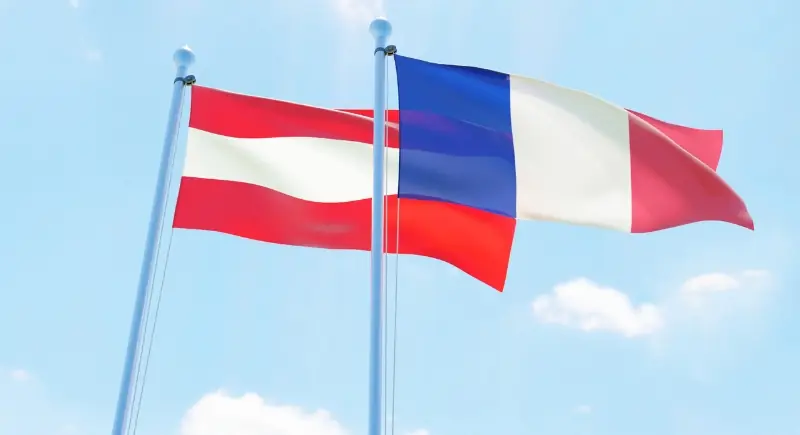
Austria created the original crescent-shaped pastry. France reinvented it using butter, lamination, and culinary precision. Both countries played essential roles, but invention and refinement are not the same thing.
So yes—sorry, France—but the croissant was actually invented in Austria. But good job making it unforgettable.