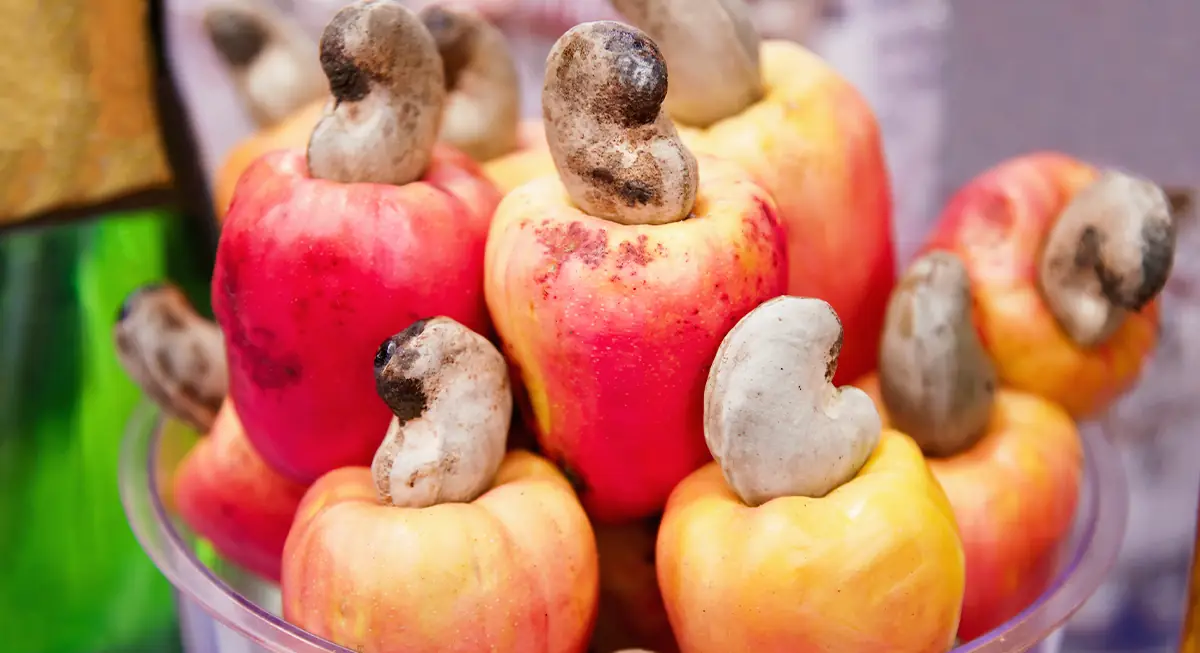
Most people have never actually seen a cashew in its shell, and that is no accident. Every cashew on a grocery shelf has already been peeled and heat-treated. They may look like an easy snack, but they go through one of the trickiest processing challenges in the nut world. The process also explains why cashews never appear in the shell at retail.
A Toxic Shell Protects Each Cashew
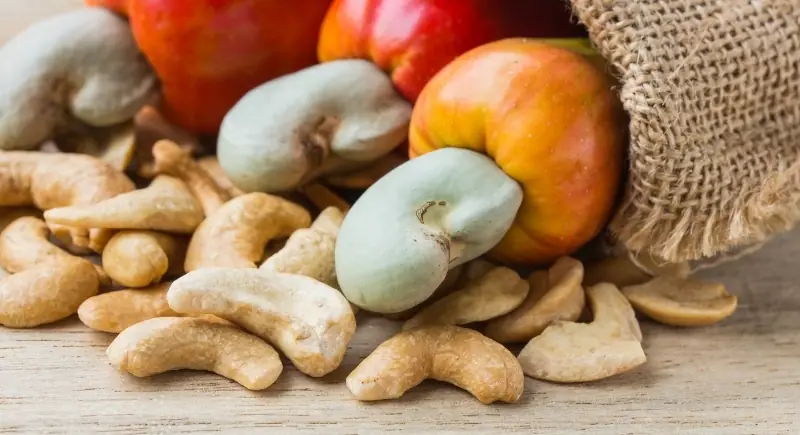
Cashew trees grow pear-shaped fruits called cashew apples. Hanging beneath each one is a single nut enclosed in a kidney-shaped shell. Inside that shell is a caustic liquid known as cashew nutshell liquid, a substance made up of phenolic compounds such as anacardic acids and urushiol-type oils.
This same chemical family is found in poison ivy and poison sumac, which can cause skin irritation and rashes on contact for people who are sensitive to these substances. The nut itself is safe, but any trace of the shell oil left after cracking can make it harmful. The only way to make cashews safe to eat is by applying high heat through industrial steam or roasting systems that destroy most of the toxic oil.
Home roasting or light toasting may not reach high enough temperatures to make them completely safe. Food plants use specialized equipment, protective gear, and ventilation to control the process safely. None of that could be replicated in a regular kitchen.
The label “raw cashews” on store shelves can be confusing. In truth, those nuts have already been steamed or roasted to destroy the toxic oil before being peeled and packaged. The term “raw” just means they were not given an additional flavor roast afterward. True raw, in-shell cashews are strictly handled in factories because of the risk involved in removing their shells.
How Processors Make Cashews Safe to Eat
Cashew production is a careful, step-by-step process. Workers harvest the cashew apples, remove the attached nuts, and sun-dry them to reduce moisture. The nuts then undergo high-heat treatment or steam cooking to break down and drive off the shell oil.
Once cooled, operators split the shells using specialized cutters designed to protect the kernel. Afterward, a thin brown skin called the testa is peeled away, and the kernels are sorted and graded. Some are roasted for flavor, while others are packed immediately as “raw” cashews. Throughout the process, workers wear gloves and protective masks.
The same oil that makes the shell dangerous is collected and refined into cashew nutshell liquid, an ingredient used in industrial resins, brake pads, paints, and protective coatings. Recycling it this way prevents environmental waste and helps offset processing costs for producers.
Pistachio, peanut, and walnut shells are harmless, which is why they are sold intact. Their shells split easily and do not contain chemicals that irritate the skin.
Extra Facts About the Cashew
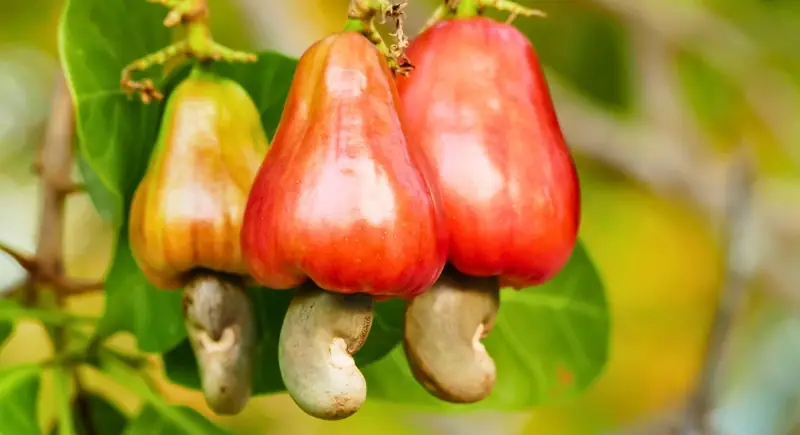
The colorful cashew apple attached to each nut is edible and rich in vitamin C. In growing regions across West Africa, India, Vietnam, and Tanzania, it is often used to make juice, jam, or distilled spirits like feni. However, the fruit bruises easily and spoils quickly, so it rarely makes its way into international trade.
Most global cashew processing happens in Asia, where large-scale steam and roasting systems handle the toxic shells safely and efficiently.