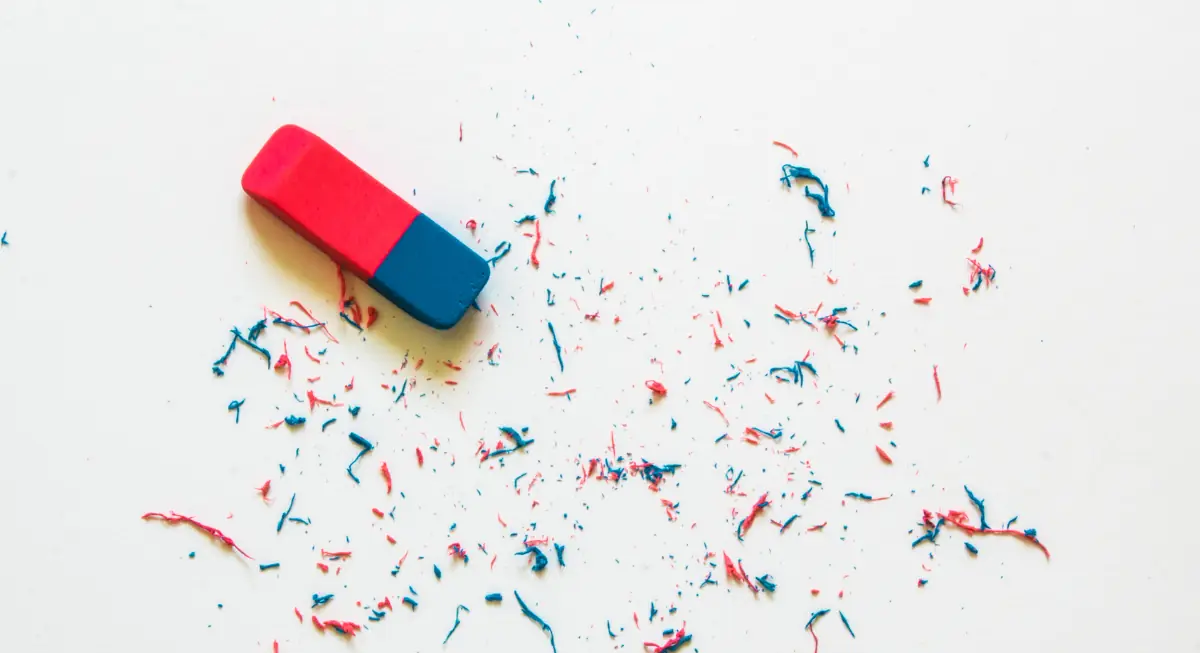
Many people remember the two-toned eraser that showed up in pencil cases across classrooms. Its split colors stood out, and students formed strong theories about what each side was for. The blue half carried the most confusion. Attempts to use it on homework pages often ended with damaged paper and a puzzled stare.
Over time, a belief formed that the blue end of the eraser erased ink. The idea spread despite most attempts producing mixed results. It managed to survive because the true purpose rarely came up in everyday schoolwork.
A Tool Built For Heavy, Textured Paper
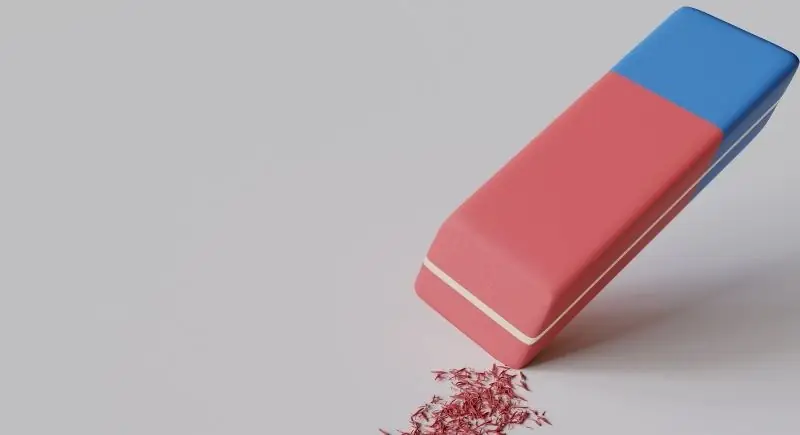
When these erasers reached the market in the 1970s, many artists, illustrators, and architects relied on thick, textured paper for sketches and technical drawings. Graphite clung more firmly to those surfaces, and a standard soft eraser struggled to lift it cleanly.
Manufacturers responded with a two-part design. One side stayed soft enough for standard notebook paper. The blue side used a firmer, more abrasive material suited for heavier sheets that could handle friction without tearing. The tougher surface created enough traction to lift graphite embedded in textured fibers.
Students eventually noticed that the coarse side sometimes lightened pen marks on sturdy card stock because it scraped a thin layer of the surface. The effect resembled erasing, but only because the paper could withstand the abrasion.
On regular notebook pages, the same action usually created holes. Those occasional results led to the belief that the blue end was an ink eraser. The explanation spread, and the design reinforced the idea because it looked different from the softer pink side. Some manufacturers later printed pen icons on certain versions, partly to match the expectations that had already formed.
What Actually Removes Ink
Products built to correct ink actually work differently. Some use chemical solutions that neutralize erasable-pen formulas. Others use rigid plastic tips that shave away a thin layer of paper with precision. These tools belong to a different category and serve distinct purposes.
The blue half of a two-toned eraser does not use those methods. It simply removes enough of the paper’s surface to make a mark appear lighter, which can give the impression of ink removal on thicker sheets.