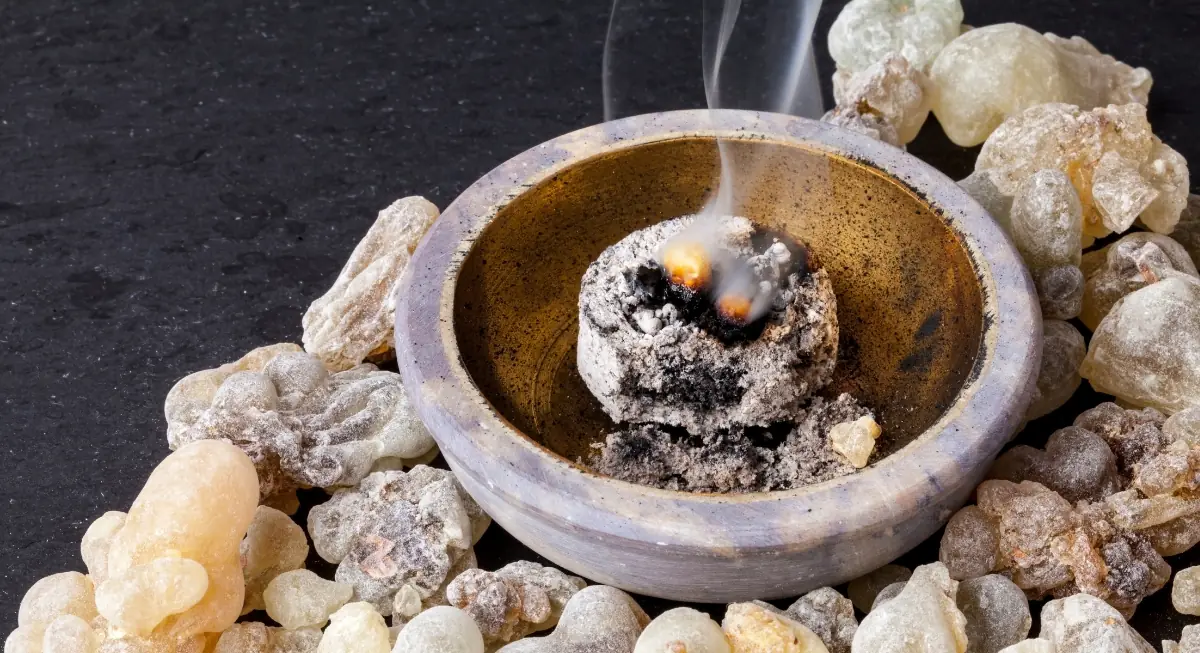
Global supplies of frankincense are shrinking because demand has increased far faster than the trees that produce it can recover. Use has expanded well beyond traditional religious and cultural settings into wellness products, luxury fragrances, and skincare, drawing heavily on wild Boswellia trees in East Africa and the Arabian Peninsula. These trees grow slowly and regenerate over decades, and their harvesting practices have changed little from ancient trade systems. As market value rises without parallel investment in cultivation or regeneration, supply continues to fall even as sales grow.
Over-Tapping Is Killing Supply
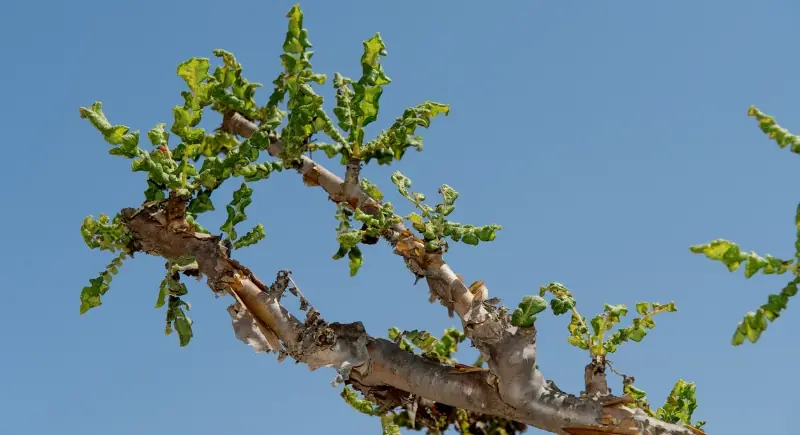
Frankincense harvesting uses a tapping method that requires restraint. Shallow cuts allow resin to harden into small tears over several weeks. Trees then need months of rest before another cycle begins. Current market pressure has shortened that rest period dramatically. Studies published over the past decade show widespread over-tapping across Ethiopia, Sudan, Eritrea, Somalia, and Oman.
Trees now receive too many cuts, are placed too close together, and are repeated too often. This invites beetles, fungi, and internal damage that weakens trees permanently. A 2011 ecological study warned that frankincense production could drop 50 percent within 15 years if practices stayed unchanged. Later research published in 2019 reported that over 75 percent of studied Boswellia papyrifera populations lacked young trees capable of replacing dying adults. Regeneration stopped working long ago.
Environmental Stress Made Recovery Harder
Harvesting alone does not explain the collapse; there’s also climate stress piled on top of extraction pressure. Drought cycles continue to intensify across the Horn of Africa, fires degrade already fragile soils, grazing animals consume seedlings before they reach maturity, and insect outbreaks spread faster across weakened groves. In some regions, agricultural expansion cleared frankincense forests entirely. Boswellia trees grow slowly under harsh conditions. Recovery takes decades even under ideal care, and combined stress erases that margin.
The Price Gap Drives Risky Behavior
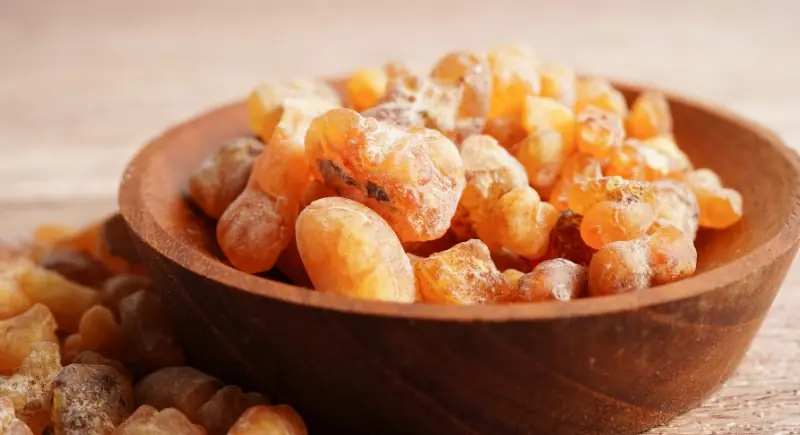
Economic imbalance keeps the cycle moving. Harvesters often receive $2 to $5 per kilogram of resin. Western suppliers later sell the same material for $60 to $100 per kilogram. The gap pushes harvesters toward volume instead of sustainability. Conflict, drought, and weak regulation limit alternatives. When frankincense becomes the only reliable income, cutting deeper and tapping faster feels unavoidable, and supply chains filled with middlemen reward speed, not stewardship.
Fixes Exist, but Adoption Lags
Traceability programs, mobile data tools, and tree health monitoring already operate in parts of Somalia and Oman. These systems track harvest locations, resin batches, and tree conditions while enabling direct payment through mobile wallets. Early pilots registered thousands of trees and harvesters while improving income consistency.
Still, the scale remains limited. Certification lacks a global standard, and buyers often prioritize price and fragrance profile over traceability. Wild harvesting continues to dominate the market. Even cultural institutions linked to frankincense consumption account for only a fraction of global demand.
Frankincense survived thousands of years because its use respected natural limits, but modern consumption broke that balance quickly. Until demand aligns with regeneration, global supplies will keep tightening.